
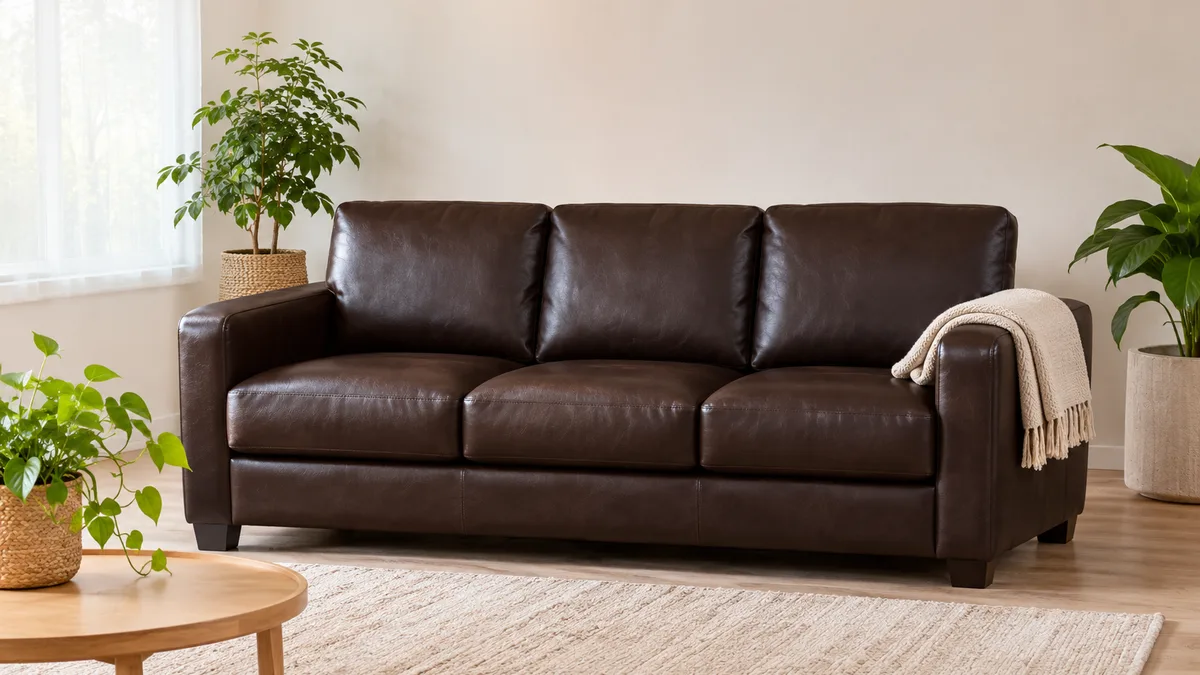

PU leather is a man-made upholstery material: a thin layer of polyurethane is bonded to a fabric backing and pressed with a grain pattern so it looks like hide. On a sofa or chair it costs less and is easy to wipe clean, but it does not age like real leather, and it usually wears out sooner.
Table of Contents
Key takeaways
- PU leather is a man-made upholstery material made of a thin polyurethane plastic layer bonded to a fabric backing.
- Expect PU leather furniture to last about three to five years of daily use before peeling or cracking begins.
- Keep furniture away from radiators and direct sunlight, because heat and humidity weaken the bond and speed up peeling.
- Clean monthly using warm water with mild washing-up liquid, and avoid alcohol, bleach, solvent sprays, and real leather conditioners.
- Inspect furniture before buying by checking for tight, even stitching and ensuring the material is not thin and papery.
If you are standing in a showroom or scrolling a listing that says “PU”, this guide covers what you are actually buying, how long it tends to last in a busy living room, and how to look after it so it lasts as long as it can.
What is PU leather, in plain words?
PU stands for polyurethane, a type of plastic that can be made soft and flexible. Makers spread it over a base cloth, usually polyester or a cotton blend, let it cure, and then emboss the surface with a pattern that copies the pores and creases of animal skin. Some furniture is finished with a matt coat so it feels less shiny.
You will see several names for it on labels and product pages:
- PU leather or polyurethane leather: the plain name for the material.
- Faux leather or leatherette: broad terms that can mean PU or PVC (vinyl).
- Vegan leather: a marketing term; on most sofas it still means PU.
- Bicast leather: a thin split layer of real hide with a polyurethane coat on top. The part you touch is still the PU coating.
The key point for a buyer: the surface you sit on is a plastic film, and that film is thin. How long the sofa looks good depends on how well that film is made and how it is treated.
Is a PU leather sofa a good choice for your home?
It can be, if you know what you are trading. PU suits some homes very well and frustrates others.
It tends to suit you if:
- you want the leather look on a lower budget, or for a short-term home such as a rental or a first flat;
- spills are common: juice, coffee and muddy hands wipe off a sealed surface easily;
- you prefer a sofa that does not hold dust, which some people with dust allergies find easier to live with.
Think twice if:
- the sofa sits in strong afternoon sun or next to a radiator, because heat speeds up cracking and peeling;
- you want a piece to keep for ten years or more;
- you have a cat or a dog that climbs on furniture: claws puncture the thin top layer, and those holes cannot be patched invisibly.
The consumer group Which? asked 1,333 sofa owners in October 2025 about damage and wear. Of the faux leather owners, 57% reported damage or wear, against an average of 33% across all sofa materials. That made faux leather the most damage-prone covering in the survey, ahead of real leather at 40%.
PU leather vs genuine leather vs fabric for living rooms
This table compares the three most common choices for a family sofa. Cost is shown as a band rather than a price, because prices vary by brand and size.
| Point | PU leather | Genuine leather | Fabric |
|---|---|---|---|
| Cost | Low to mid | High | Low to high |
| Typical life before visible wear | About 3 to 5 years | 15 years or more with care | Depends on weave and rubs |
| Spills | Wipe off easily | Wipe off if treated | Can stain; needs a protector |
| Pets | Claws puncture the film | Scratches, but can be buffed | Tight weaves resist best |
| Feel in summer | Can feel sticky and warm | Breathes and warms to the body | Breathes well |
| Ageing | Peels or cracks, no patina | Develops a patina | Fades, pills or sags |
The lifespan figures above come from furniture retailers, not lab tests, so treat them as a rough guide. A well-made PU sofa in a shaded room can go longer; a thin one in a sunny bay window can fail sooner.
How long does PU leather furniture last?
Most retailer guides put PU upholstery at around three to five years of daily use before peeling or cracking starts, with better grades lasting longer under good care. The damage usually shows first where skin and clothes rub most: the front edge of the seat cushions, the tops of the arms and the headrest.
Four things shorten its life the most:
- Heat and humidity. They weaken the bond between the coating and the cloth underneath, which is why peeling often starts in warm, damp rooms.
- Direct sunlight. UV light dries and fades the surface over time.
- Body oils and lotions. Skin oil, sunscreen and hair products soften the film where heads and arms rest.
- Harsh cleaners. Alcohol, bleach, solvent sprays and some wipes strip the top coat.
How to check a PU sofa before you buy
A few minutes in the shop, or a few questions to an online seller, tell you a lot about how a PU sofa will hold up.
- Read the label. Look for the words PU, polyurethane, bicast or PVC. If a listing only says “leather look”, ask what the covering is.
- Ask where the PU is. Some sofas are “leather match”: real leather on the seats and backs, PU on the sides and back panel. That mix lasts better where you sit.
- Feel the thickness. Pinch an edge or a seam allowance if you can. A very thin, papery film is the kind that peels early.
- Check the seams. Stitching should be tight and even with no puckering; loose seams let the film lift.
- Look at the cushions. Removable cushion covers with zips are easier to replace or reupholster later.
- Read the warranty. Ask whether peeling or cracking of the covering is covered, and for how long.
Our guide to the things to consider when buying a new couch covers size, frame and comfort, and the tips on choosing the right sofa colour help if you are torn between black, brown and lighter shades, each of which shows dirt and scuffs differently.
How to care for PU leather furniture
PU does not need the oils and conditioners that real leather does. What it needs is gentle cleaning and protection from heat and sun.
| When | What to do |
|---|---|
| Weekly | Dust with a dry microfibre cloth or a soft vacuum brush, including the creases where crumbs collect. |
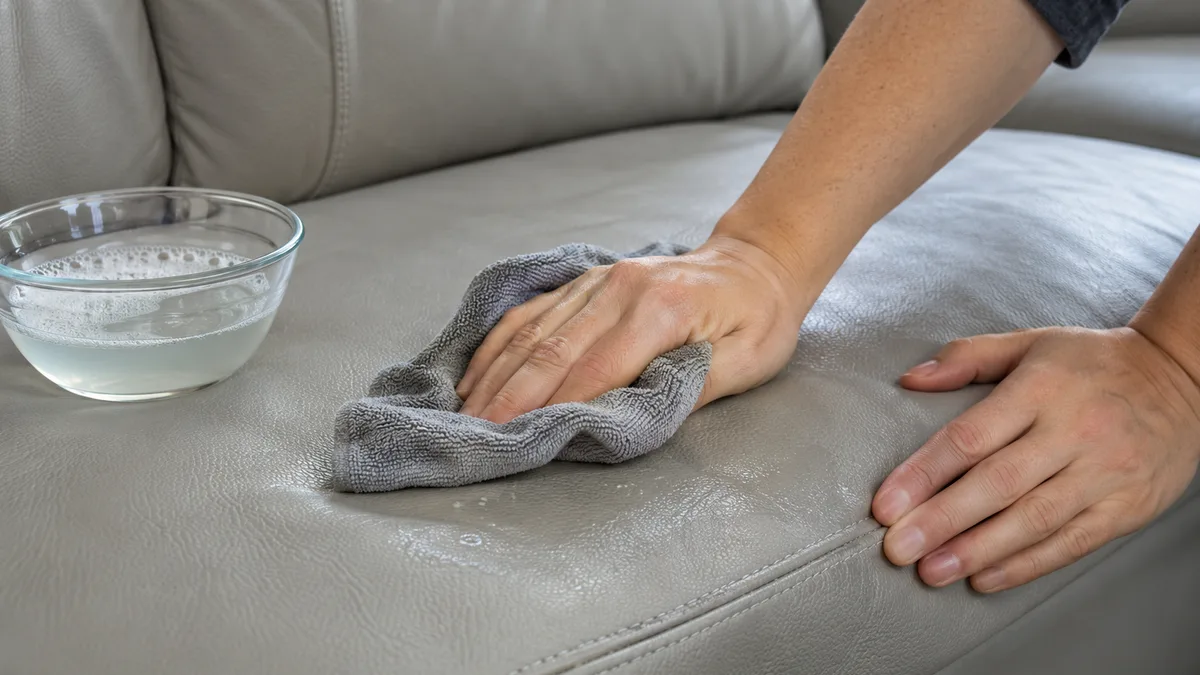
| Monthly | Wipe with a cloth dampened in warm water and a few drops of mild washing-up liquid, then wipe again with clean water and dry with a soft towel. |
| Spills | Blot straight away, then do the monthly wipe on that spot. Do not let liquid sit in seams. |
| Headrests and arms | Wipe these more often, since skin oil and hair products build up there first. |
| All year | Keep the sofa at least a short step away from radiators and out of strong direct sun, or use blinds or UV film on the window. |
Avoid alcohol, bleach, ammonia, solvent-based sprays, magic-eraser sponges and leather conditioners made for real hide: they can dull, strip or soften the coating. Test any new product on a hidden spot first. For a fuller routine across fabric and leather pieces, see our guide on how to clean your sofa without causing damage.
When PU leather starts to peel: what you can do
Peeling is the most common way PU furniture fails. Once the film lifts off the backing, it is very hard to repair so it looks new, so the realistic choices are to slow it down, hide it or replace the cover.
- Small flakes: trim loose flakes with small scissors so they do not catch and tear further, then use a vinyl and leather repair kit or a matching filler compound on the bare spot.
- Worn seat cushions only: ask the maker for replacement cushion covers, or have an upholsterer re-cover just the cushions.
- Wide peeling on arms and backs: a fitted stretch cover or a throw buys time; full reupholstery makes sense only if the frame and springs are still good.
If the frame is sagging as well, it may be time to weigh up a new piece. Our article on knowing when it is time to replace a sofa lists the signs to check before you spend money on repairs.
Frequently asked questions
Is PU leather waterproof?
The surface resists water, so spills sit on top and wipe off. The seams and the fabric backing are not waterproof, so liquid that runs into stitching can soak in.
Does PU leather smell?
New PU can have a light chemical smell for a few days or weeks. Airing the room usually clears it. Real leather has a different, earthier smell.
Can you use leather conditioner on PU?
It is better not to. PU is a plastic film, so it does not absorb conditioner the way hide does, and some conditioners leave a greasy layer that attracts dirt.
Is PU leather good with dogs and cats?
It is easy to wipe hair and drool off, but claws can puncture the thin coating. A washable throw on the pet’s favourite seat helps a lot.
Is PU leather the same as vegan leather?
On most sofas, yes. “Vegan leather” describes any leather-look material made without animal hide, and PU is the most common one in furniture.